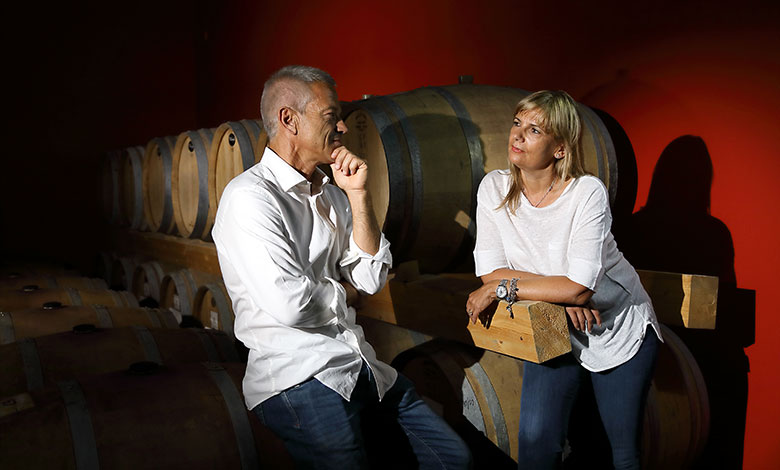
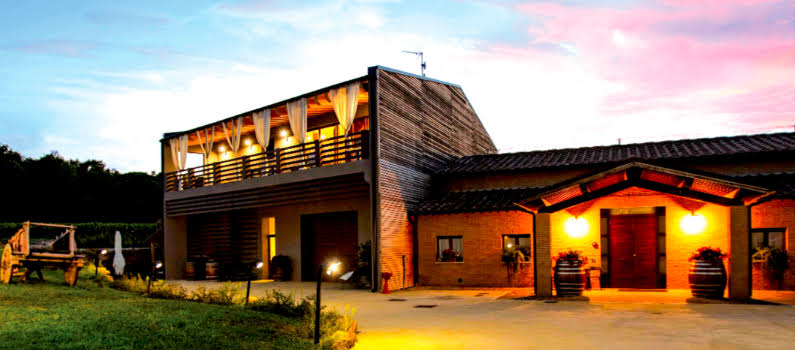
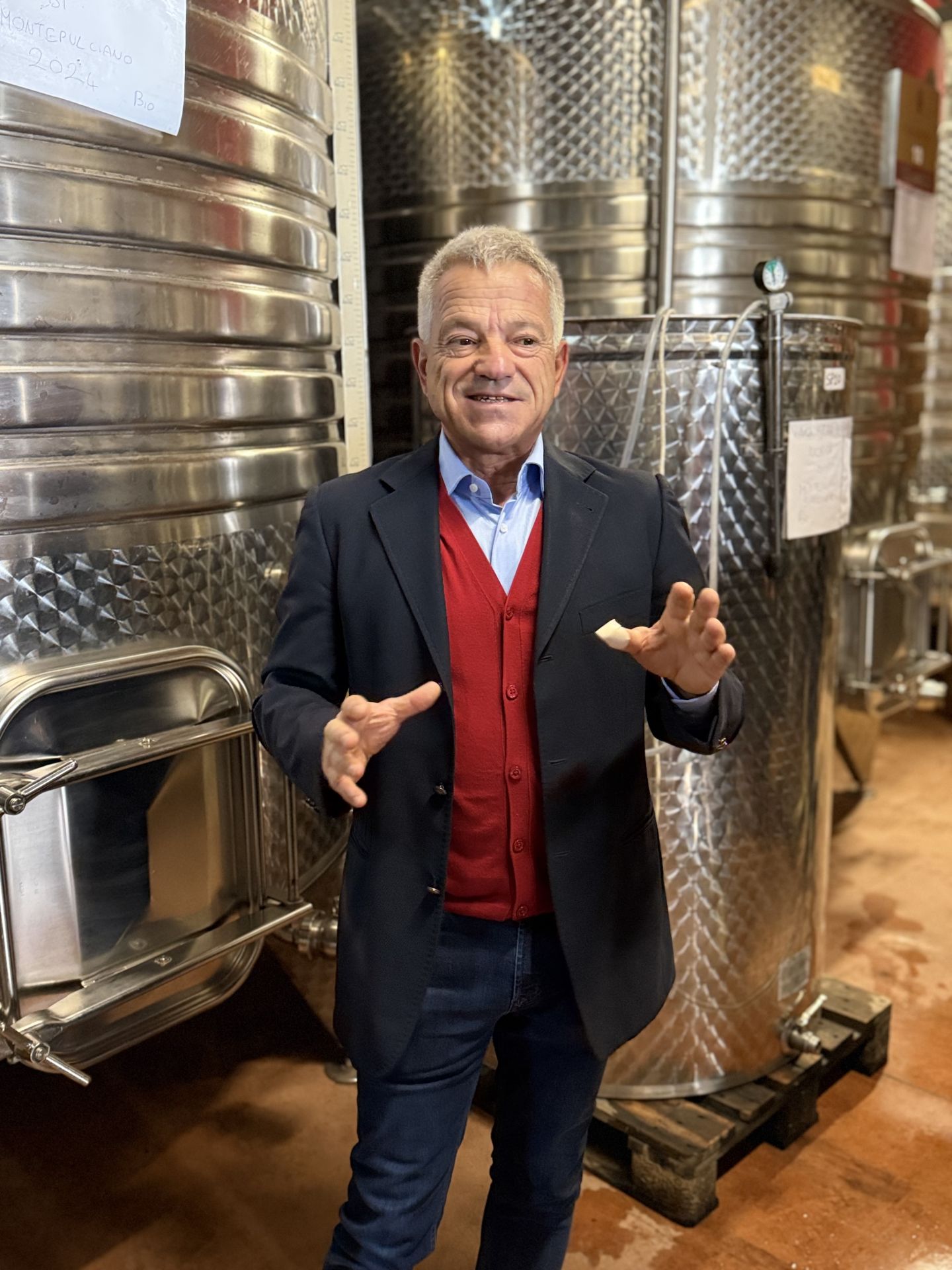
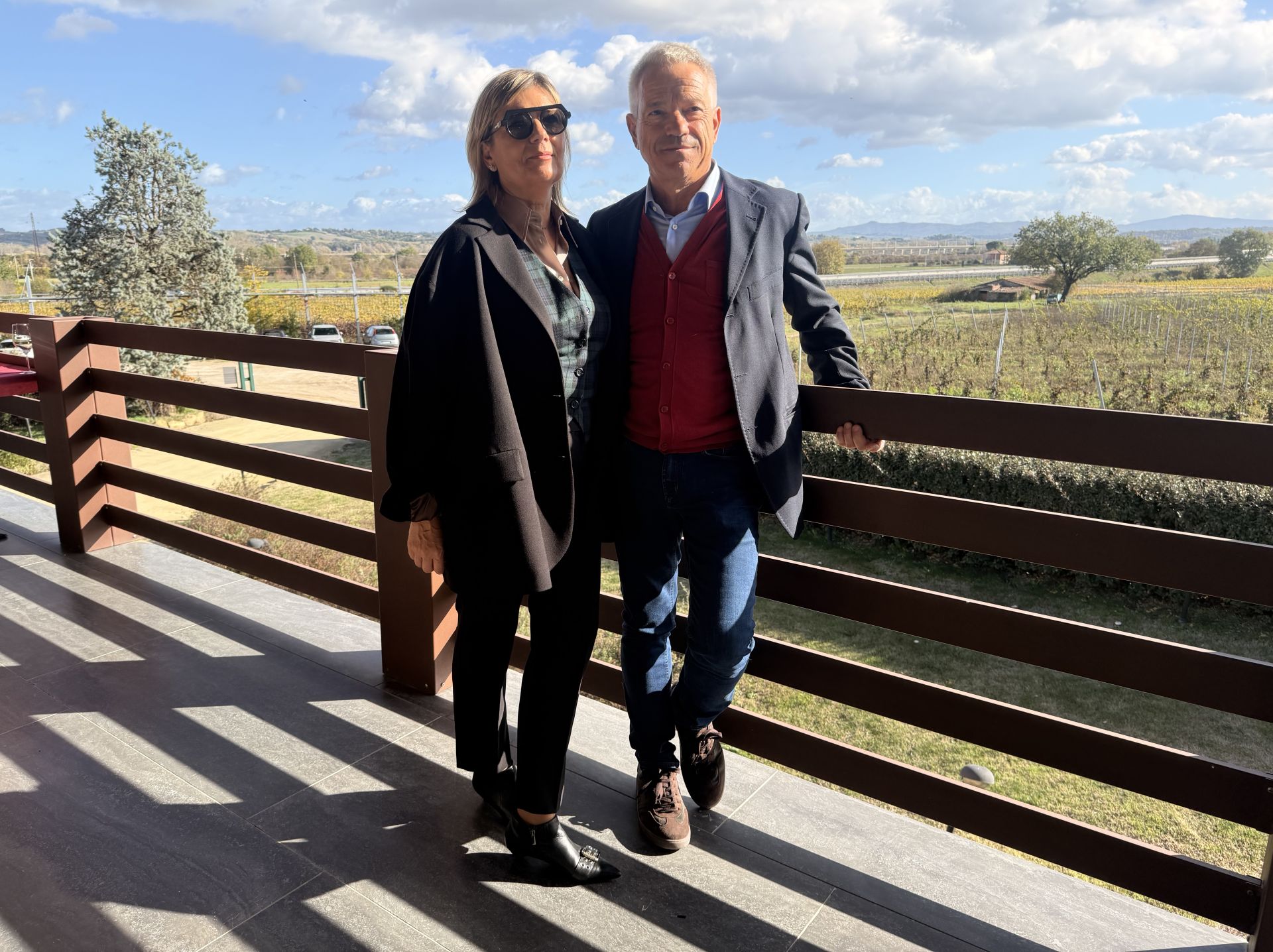
A meeting with the owners provides an opportunity to get an up-close look at a business that has chosen to build its identity around specific values: respect for the environment, the pursuit of excellence, and a focus on people.
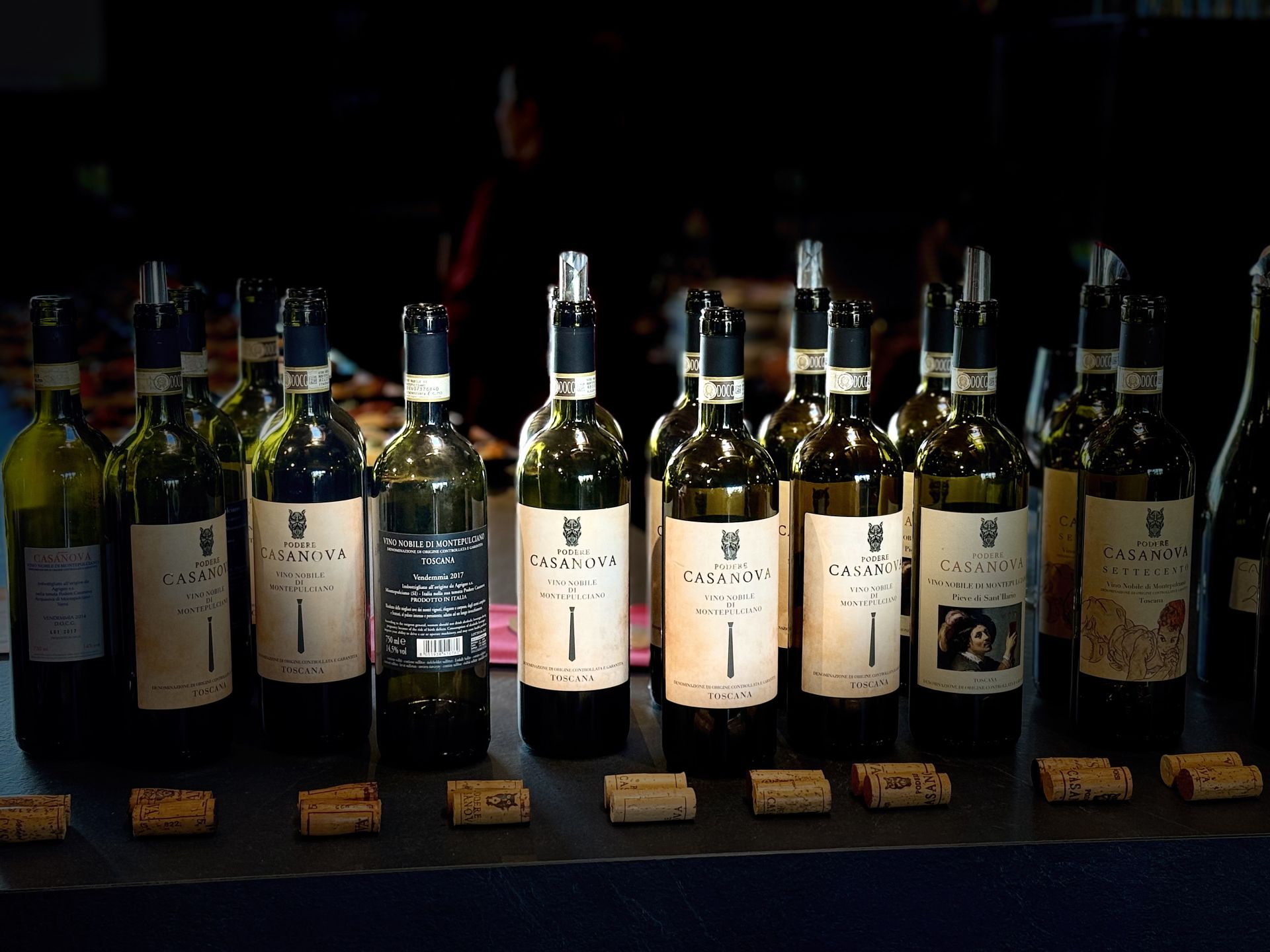
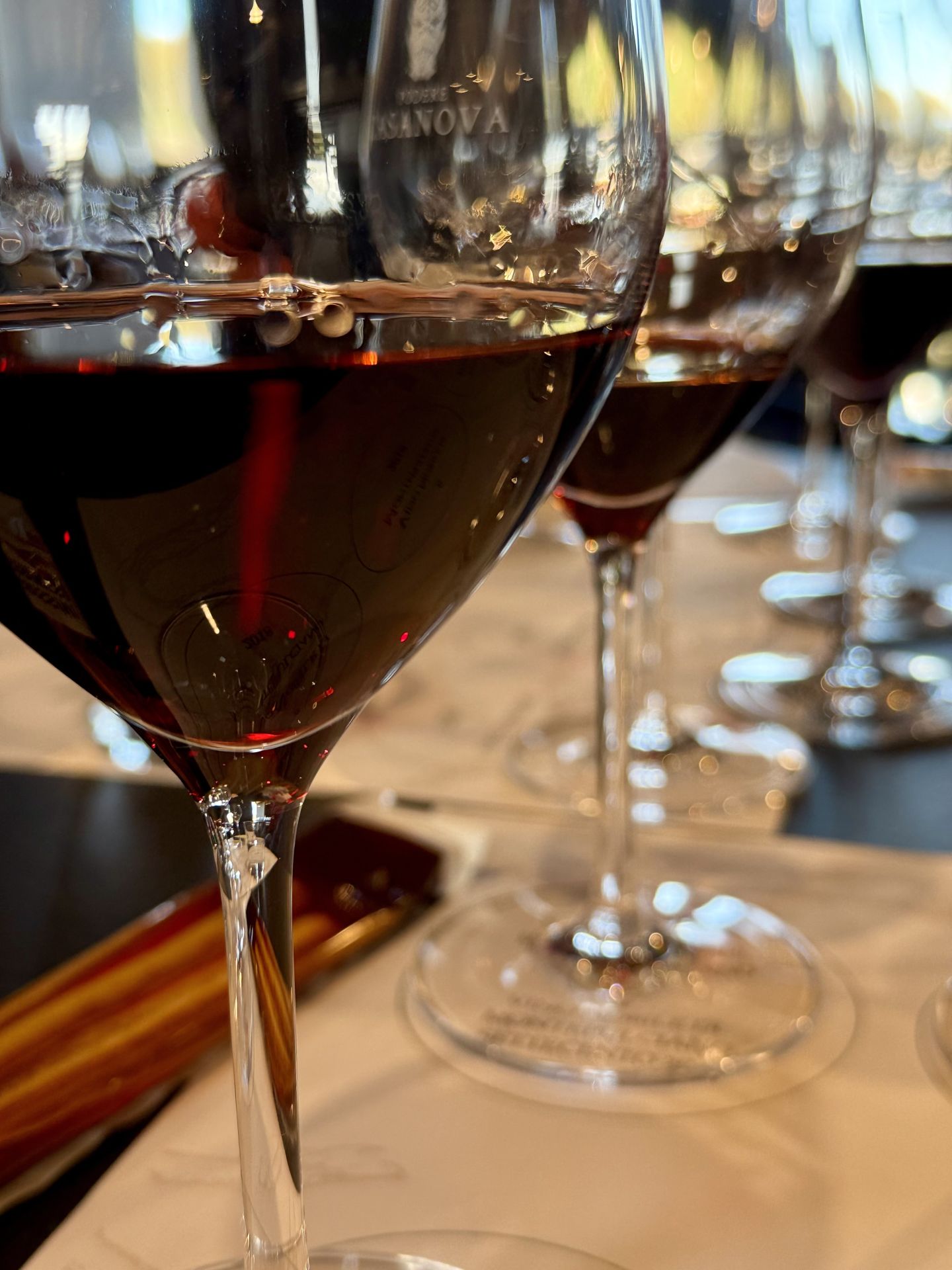
Podere Casanova celebrates its first ten years in business with us through a vertical tasting of Vino Nobile di Montepulciano, a journey through different vintages that allows us to appreciate the wine’s evolution and understand how time can become a valuable ally.
Before heading to the tasting room, we’ll visit the Wine Art shop in Montepulciano: “much more than just a wine shop—it’s a crossroads between winemaking tradition and contemporary art.”
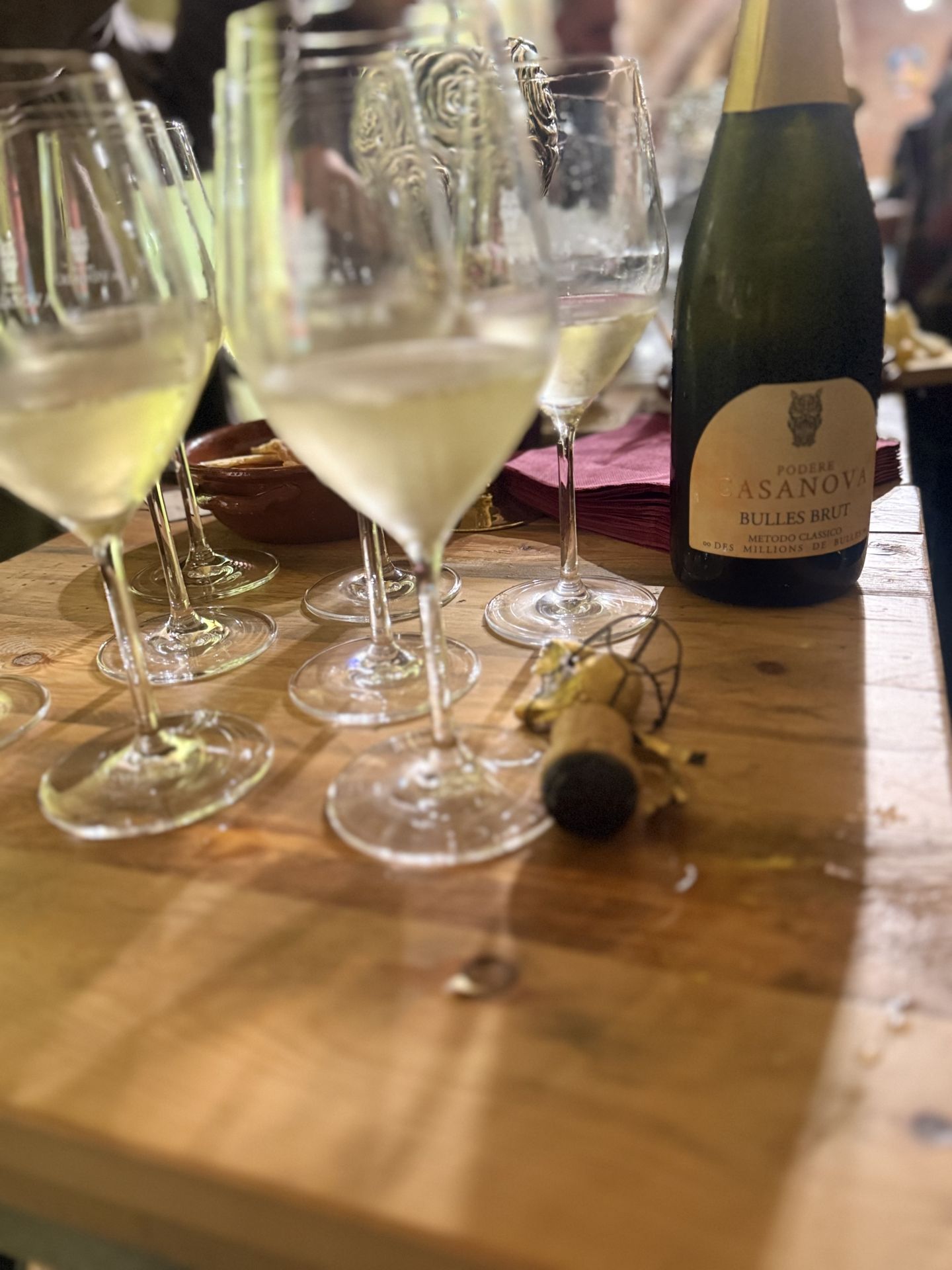
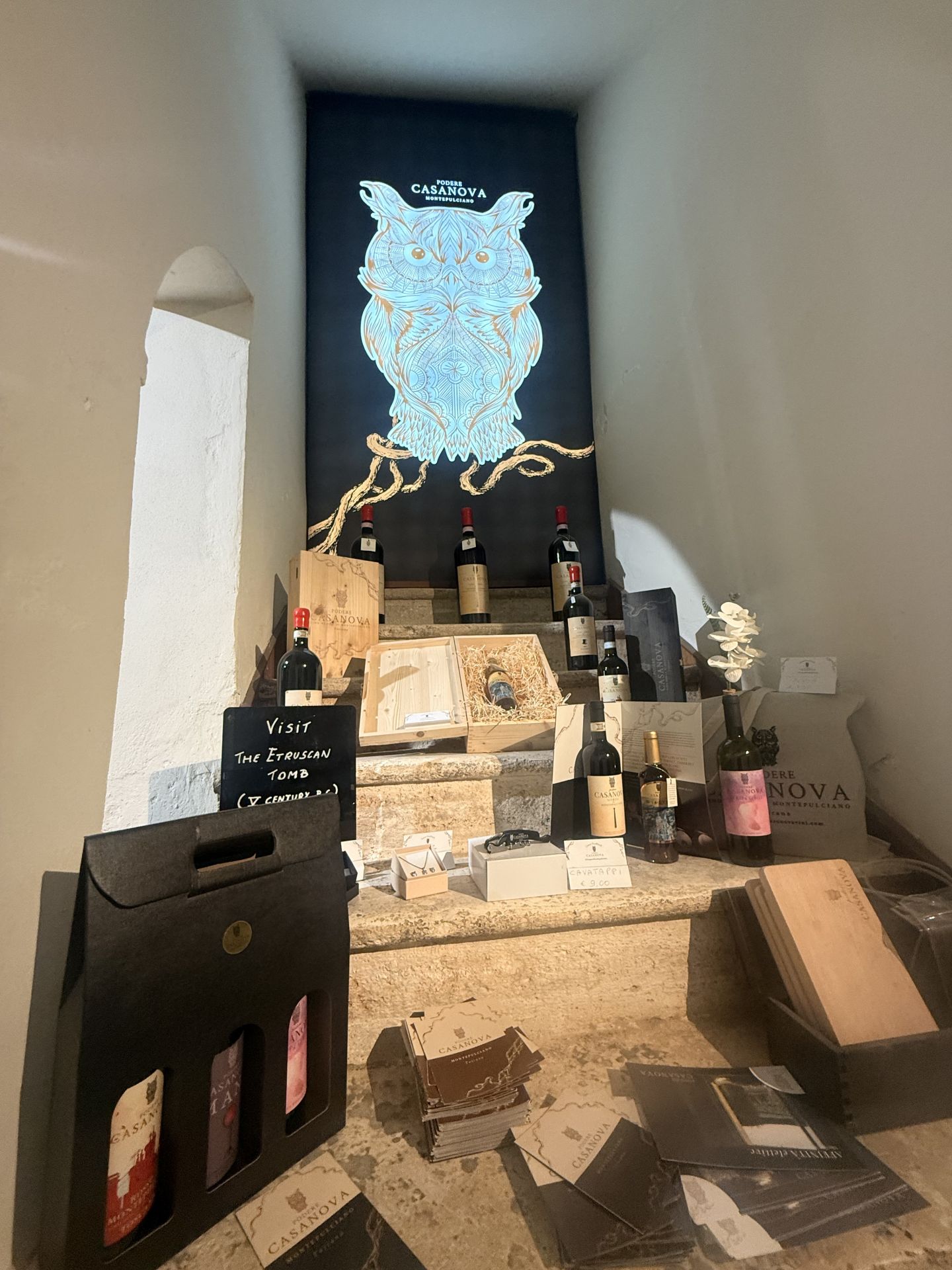
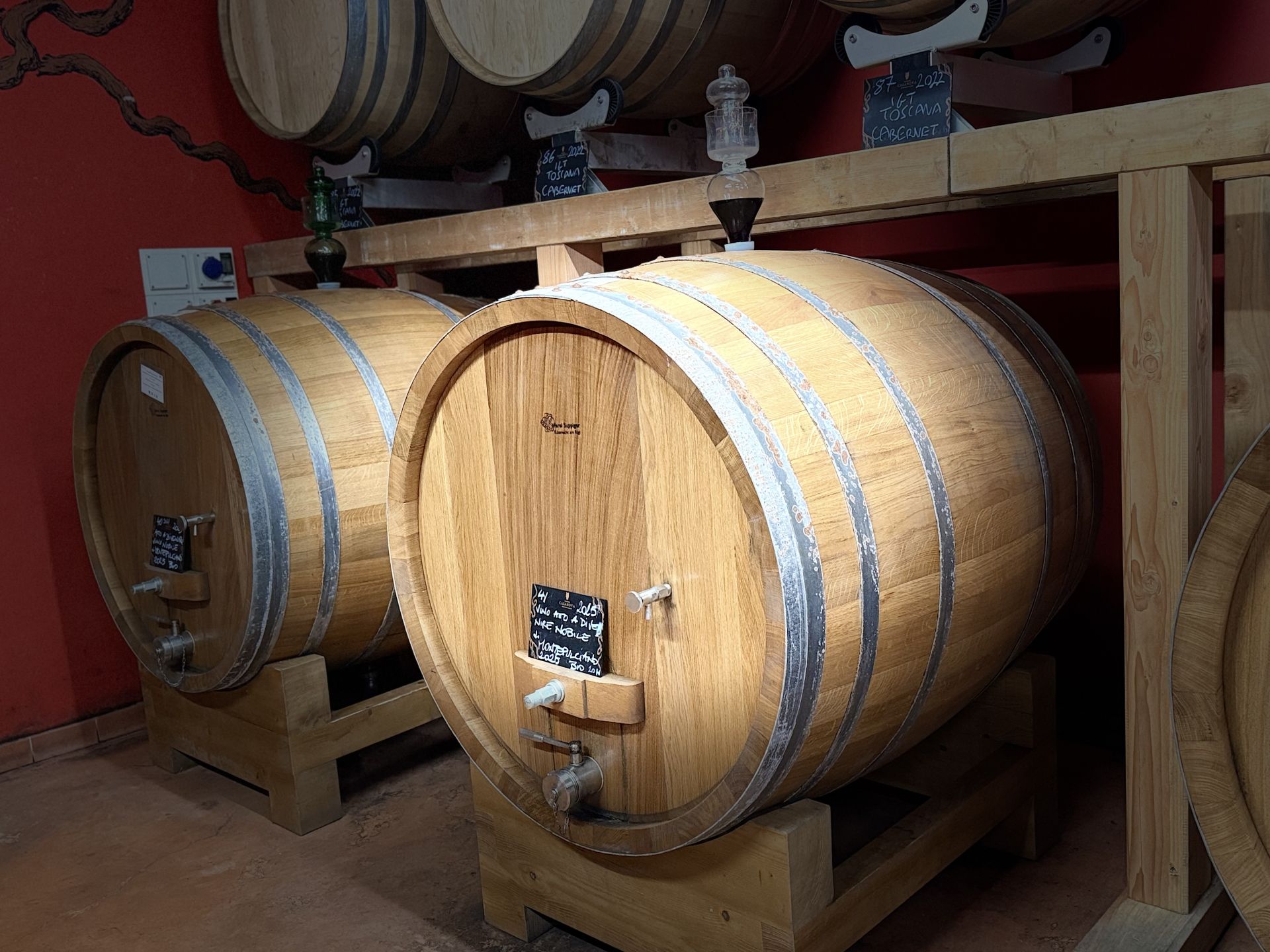
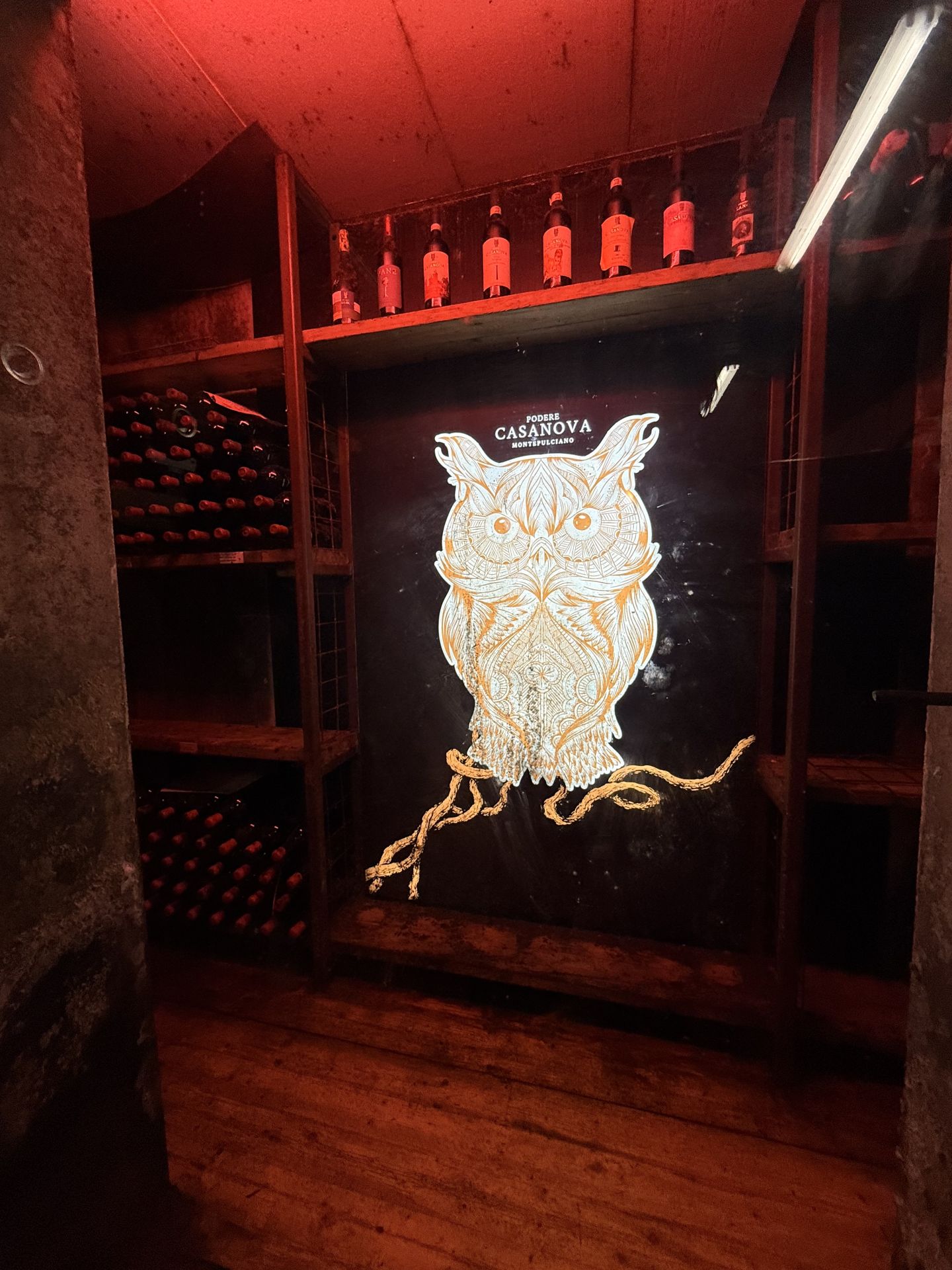
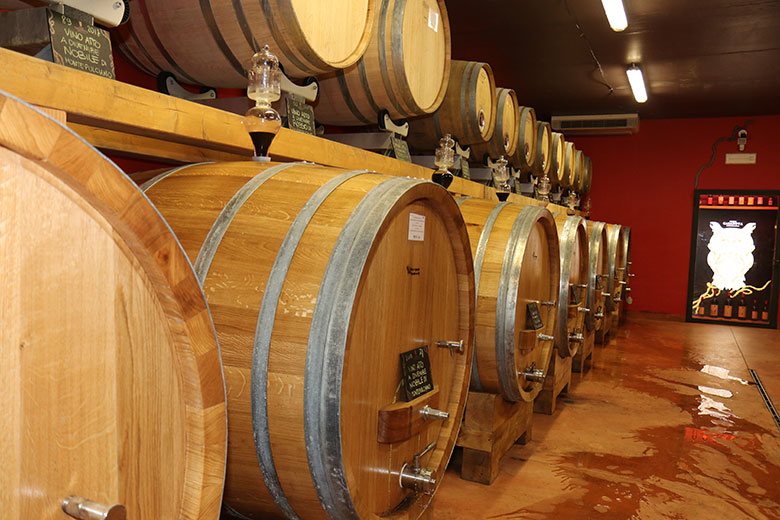
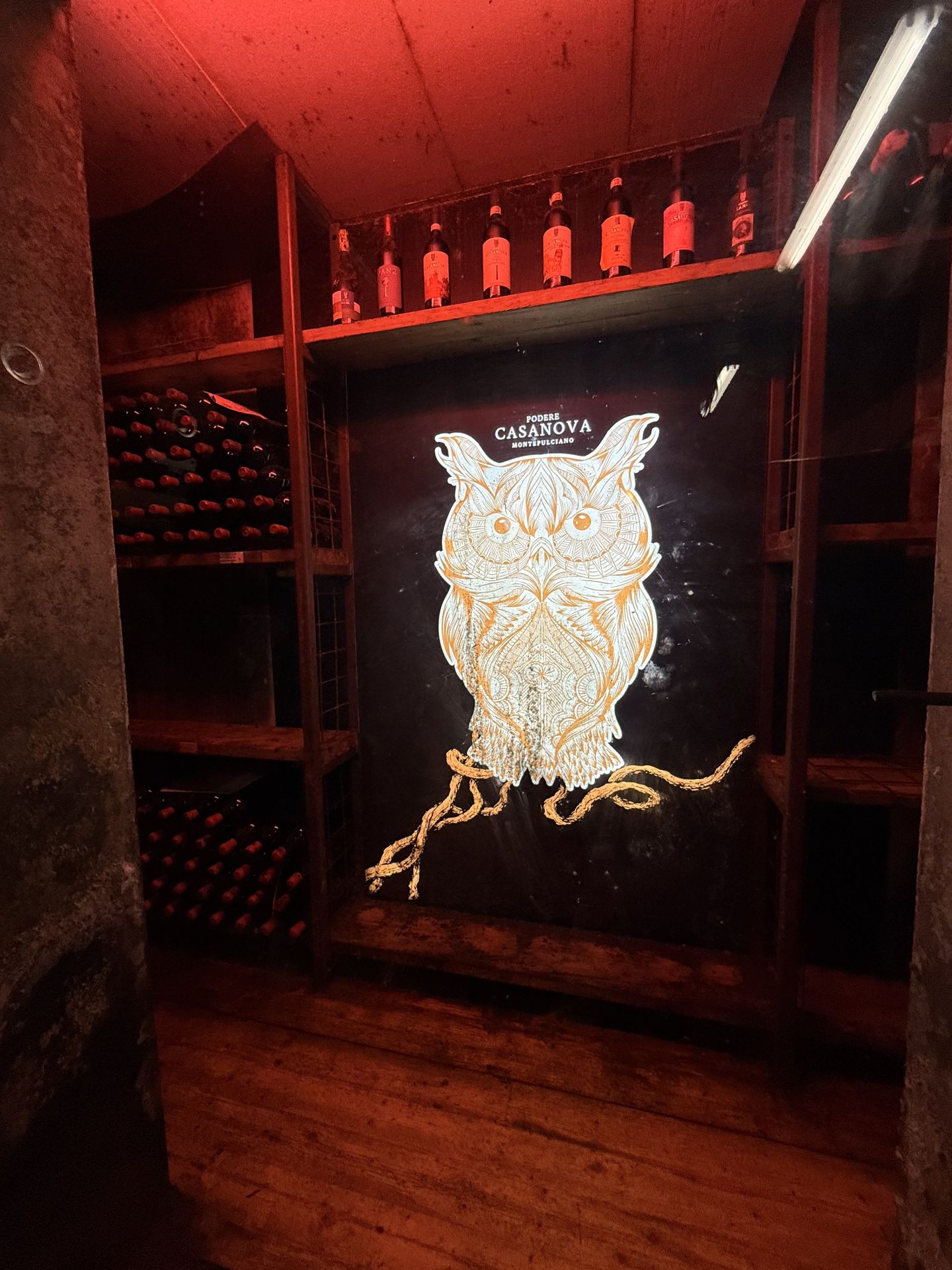
At the end of the tour, on the estate, lies the aging cellar. Here, amid the barrels and the aromas that accompany the wine’s maturation, the story takes shape of a business born of passion and nurtured through a series of conscious choices.
It is precisely by listening to this story that perhaps the most interesting aspect of Podere Casanova emerges: the commitment to never separate the quality of the product from the responsibility with which it is produced.
“During the Age of Enlightenment, the adventurer Giacomo Casanova found himself in the rolling hills of Tuscany on several occasions, bringing with him the cosmopolitan air of Venice and the scent of seduction.
HE HAD A SPECIAL CHARM…
His eyes shone like a kaleidoscope; he was a poet, an alchemist, a diplomat, a philosopher, and even a secret agent.
He was a man of a thousand faces. Perhaps his seductive power stemmed from this mosaic of qualities. Upon arriving in Tuscany, he fell madly in love with a charming lady.
But on that occasion, it was he who was seduced, not the one doing the seducing—so skillfully could that noblewoman gently guide events.”
When Sustainability Becomes a Conscious Choice
In an era in which sustainability has become a permanent part of corporate vocabulary, distinguishing between intentions and concrete actions is becoming increasingly important.
At Podere Casanova, respect for the environment is not an afterthought, but a conviction that guides daily work—from tending the vineyards to production decisions.
The winery follows organic farming practices and has obtained Equalitas certification, which takes into account sustainability in its environmental, social, and economic dimensions.
The quest to strike a balance between production and nature conservation has led, over the years, to experimentation with innovative solutions, such as the use of anolyte and zeolite, with the goal of significantly reducing the use of copper in the vineyards.
Although copper is permitted within certain limits in organic farming, it can accumulate in the soil and have negative effects on soil organisms. Reducing its use therefore represents a major challenge for a viticulture sector that is increasingly environmentally conscious.
But it is one particular incident that best illustrates the profound meaning of this philosophy.
In 2023, when downy mildew compromised the growing season, Isidoro and Susanna Rebatto faced a difficult decision: intensify treatments to try to save the harvest, or remain faithful to the principles they had chosen to follow.
They decided not to harvest the grapes.
This was a financially demanding choice, one that takes on special significance when we consider how much work, hope, and investment are poured into an entire year of farming.
Yet it is precisely in that sacrifice that the strength of an ethical project is revealed.
Because sustainability gains value above all when it entails concrete responsibility—when it requires looking beyond immediate results and viewing the land not merely as a productive resource, but as a heritage to be protected.
It is a lesson that transcends the boundaries of viticulture and touches on the very meaning of doing business.
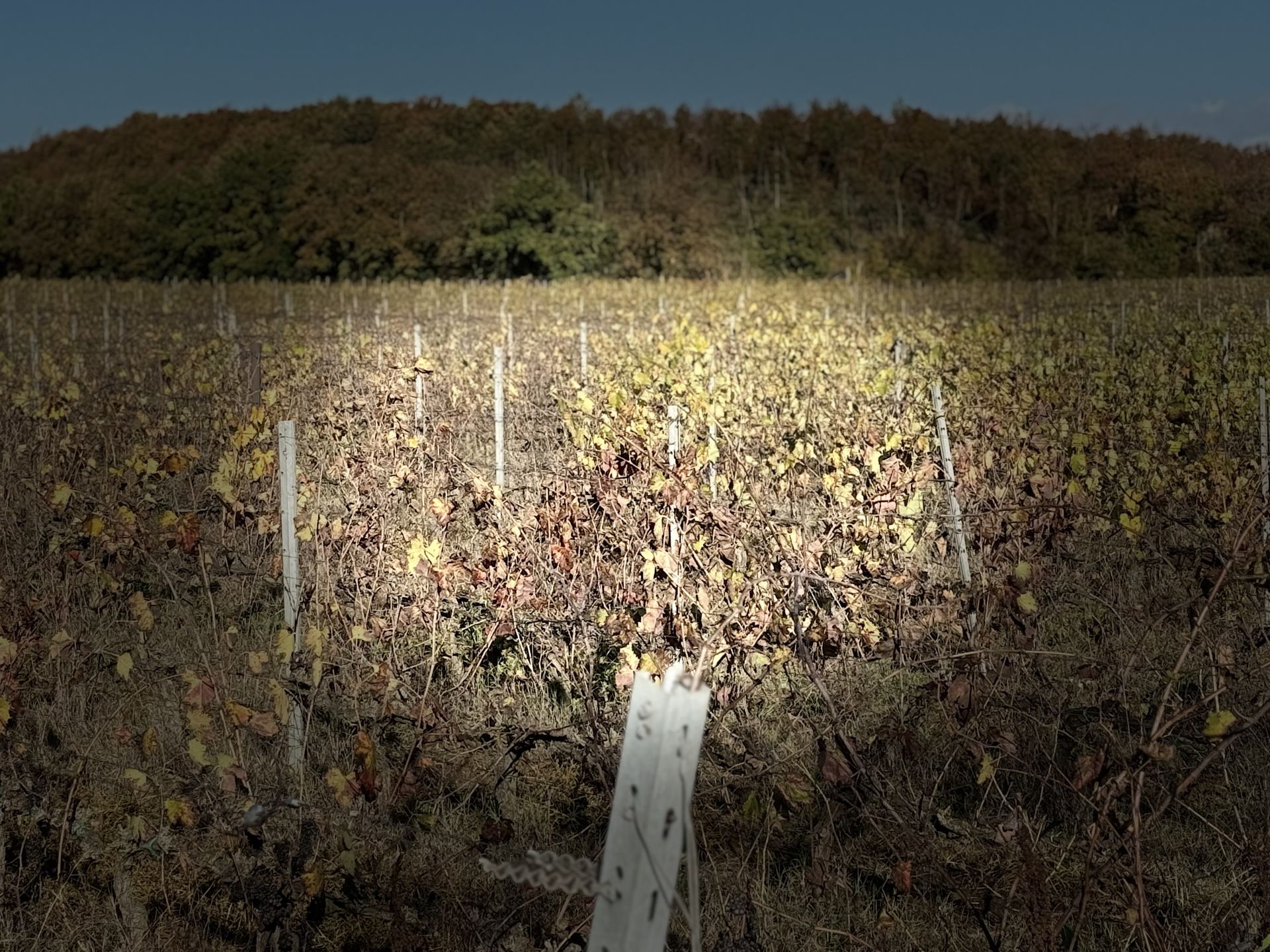
Seventeen hectares of biodiversity and agricultural expertise
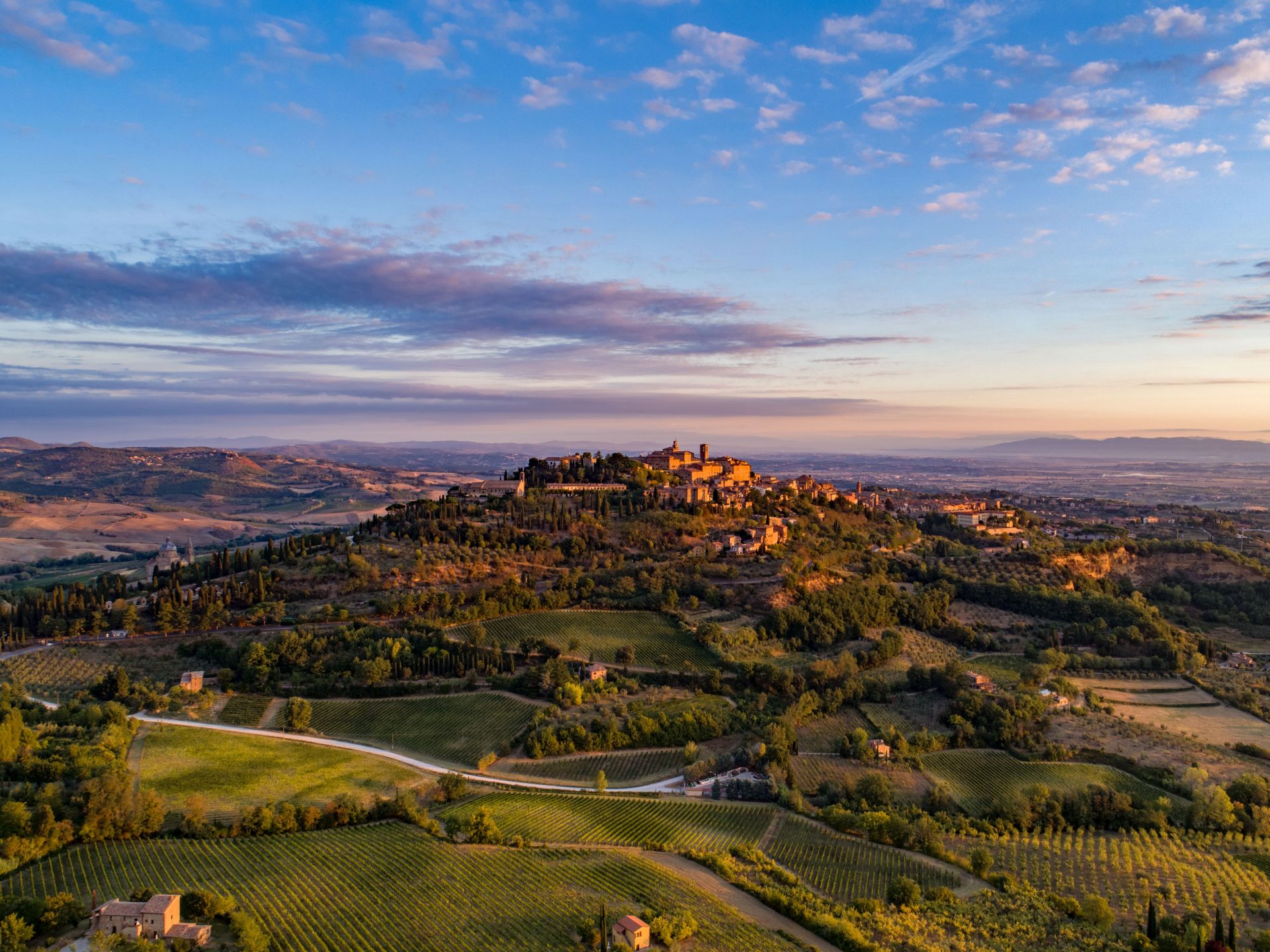
The landscape surrounding Podere Casanova helps define the character of its wines.
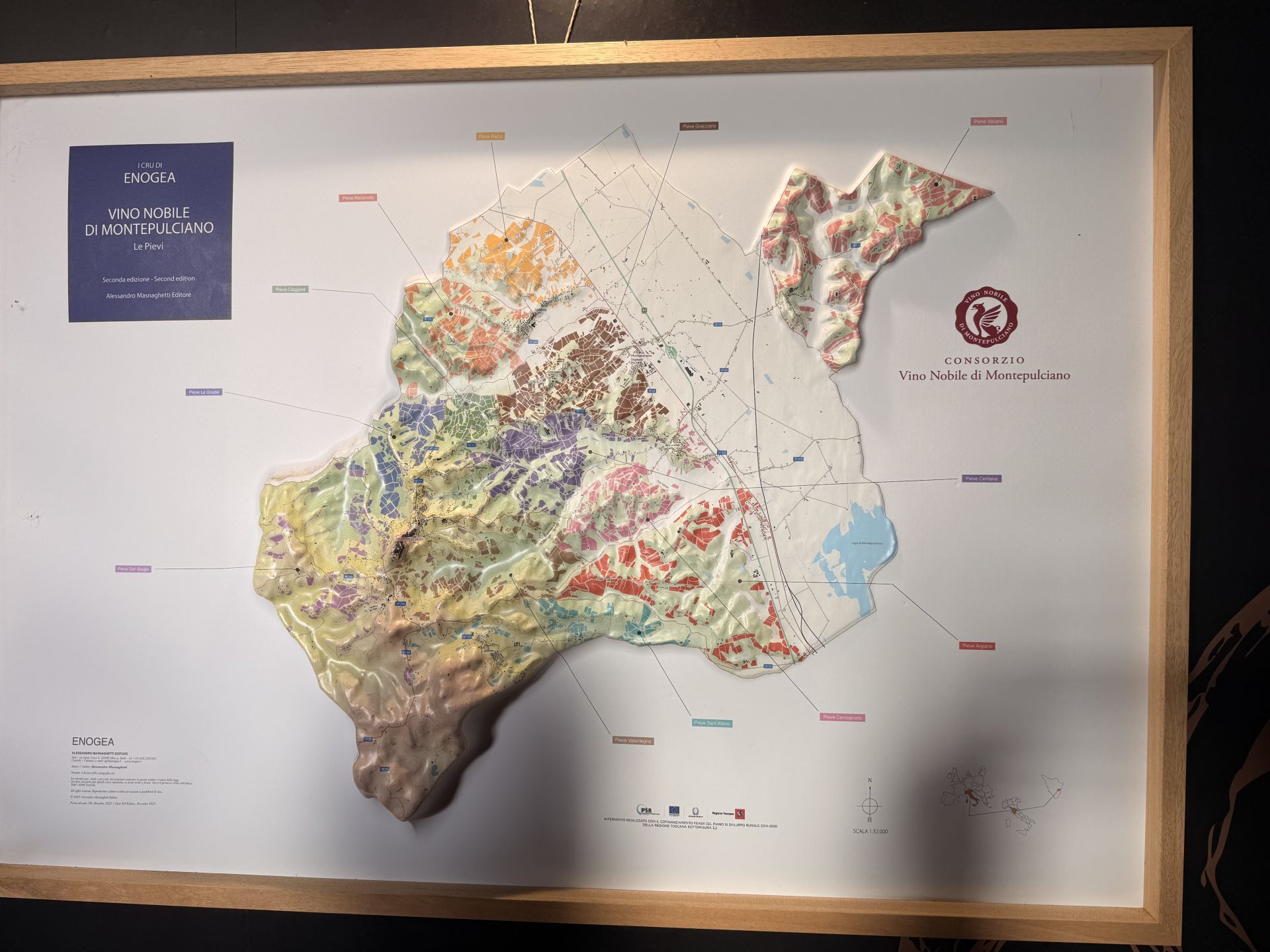
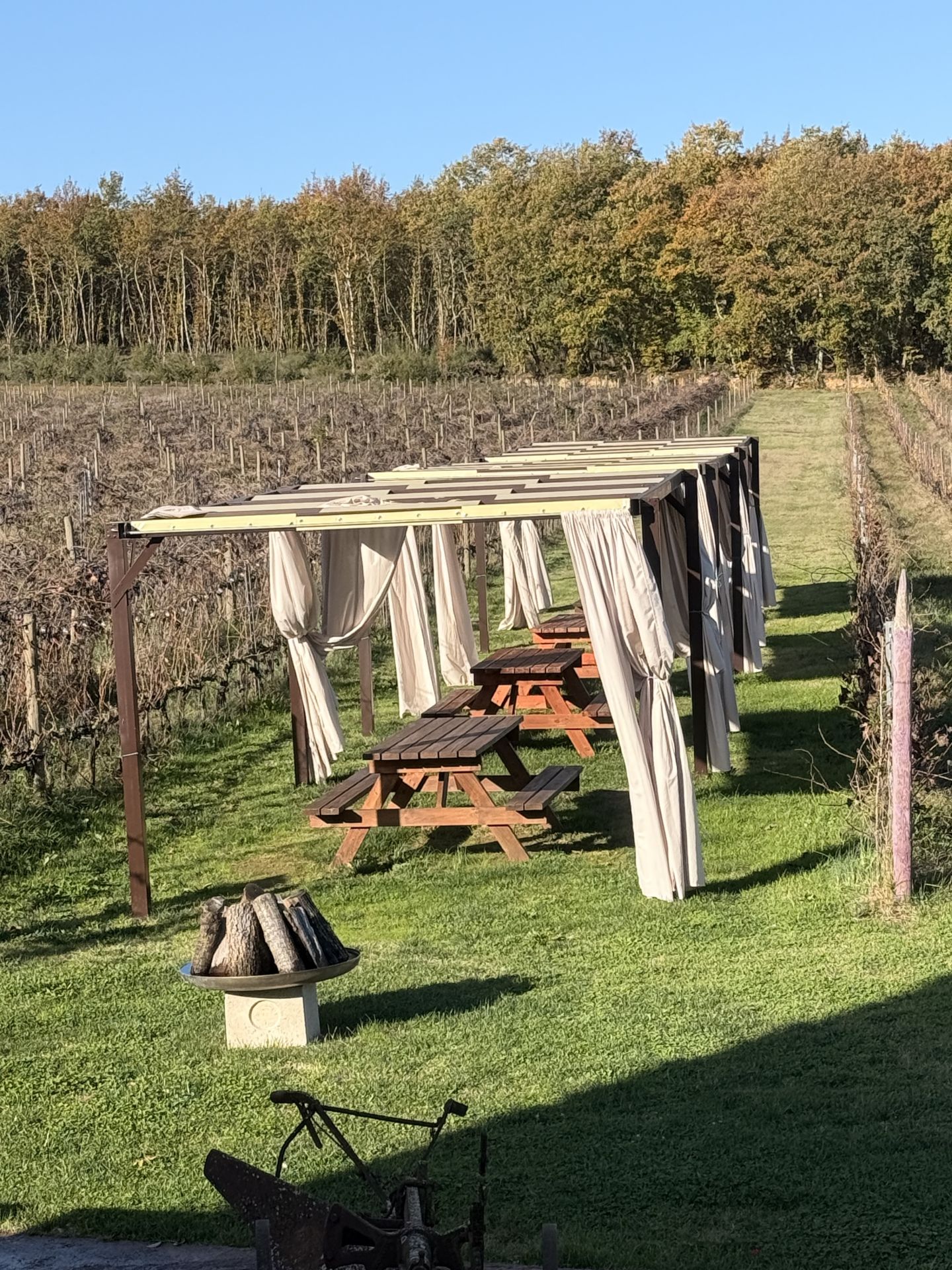
The seventeen hectares of vineyards are located about 250 meters above sea level, on sandy and clayey soils, surrounded by oak forests. The constant breeze and significant temperature fluctuations between day and night promote grape ripening in which climatic and terroir characteristics play an essential role.
Sangiovese plays a central role in production, alongside Chardonnay, Verdello, Teroldego, Merlot, Petit Verdot, Cabernet Sauvignon, Syrah, Sauvignon Blanc, Petit Manseng, and Grechetto.
This variety of grape varieties reflects a commitment to exploring different winemaking expressions while maintaining a constant connection to the characteristics of the terroir.
The harvest is done by hand. The clusters are gathered into small crates and transported to the winery, where a meticulous selection process begins.
An initial pass over a manual sorting table allows for the identification of the grapes best suited for winemaking. This is followed by an automated selection of the berries, complemented by a final check carried out by experienced staff.
These three steps reflect a precise vision of quality, in which technological innovation does not replace human intuition but complements it.
Because even in the most advanced production processes, there remains an element that stems from knowledge, observation, and the ability to interpret what nature offers.
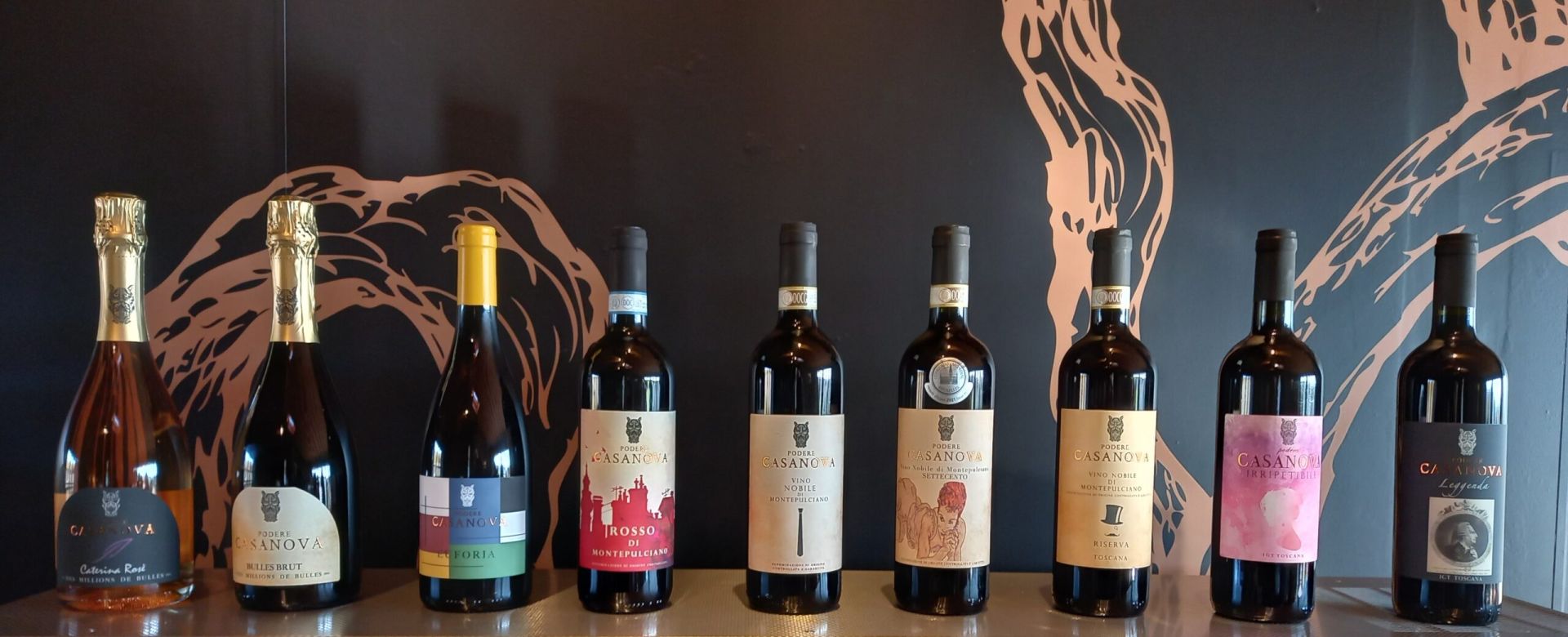
Wines of great substance—the character of a land in the glass
From the Rosso di Montepulciano to the Vino Nobile di Montepulciano, all the way to the legendary Super Tuscan, Podere Casanova’s wines express distinct personalities, united by a pursuit of elegance, balance, and distinctiveness.
Tuscan winemaking tradition meets rigorous production and aging methods, designed to highlight the grapes’ characteristics and guide the wines’ evolution without compromising their identity.
Tasting different vintages means observing the wine as it changes, recognizing the nuances that time has brought out, and discovering how each season has left its mark.
There are aromas that unfold slowly, sensations that gain depth, and balances that transform. The wine thus becomes a sort of liquid memory, capable of preserving the story of what happened in the vineyard many years earlier.
It is an experience that engages the sense of taste, certainly, but also the sense of smell and that particular dimension of memory that links scents to memories.
An aroma can transport us back to a place; a sensation can evoke an encounter; a flavor can become the symbol of a moment lived.
And this is perhaps one of the reasons why wine continues to fascinate: because it belongs not only to gastronomic culture but also to our emotional experience.
A 19th-century estate where you can experience Tuscany at a leisurely pace
Podere Casanova, however, is not just a wine destination.
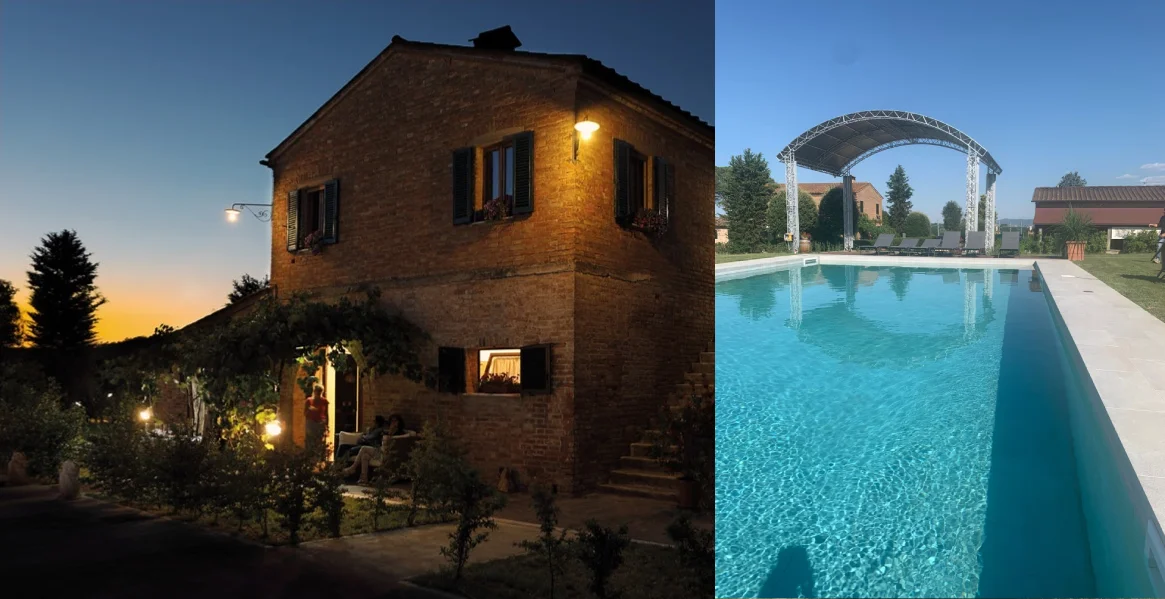
Hospitality is another expression of the company’s philosophy, offering visitors the chance to immerse themselves in the beauty of the Tuscan countryside and explore the region through a variety of experiences.
Three apartments have been created within the late 19th-century manor house, each featuring a private outdoor area with a garden and a sun deck.
These spaces are designed for those who wish to rediscover the pleasure of tranquility, far from the hectic pace of everyday life, without sacrificing comfort.
A large swimming pool nestled among the vineyards completes the welcoming atmosphere, offering guests a setting where the lush greenery of the countryside becomes an integral part of their stay.
Here, time seems to take on a different meaning.
The morning light filtering through the rows of vines, the silence broken only by the sounds of nature, and the colors that shift as the hours pass invite you to rediscover a form of well-being that is increasingly sought after: one that arises from simplicity and the chance to treat yourself to an authentic break.
It is a concept of understated luxury that needs no excess to leave a lasting impression.
A theater among the vineyards, where wine meets culture
Among the most original features of Podere Casanova, one space stands out that reflects the project’s cultural sensibility.
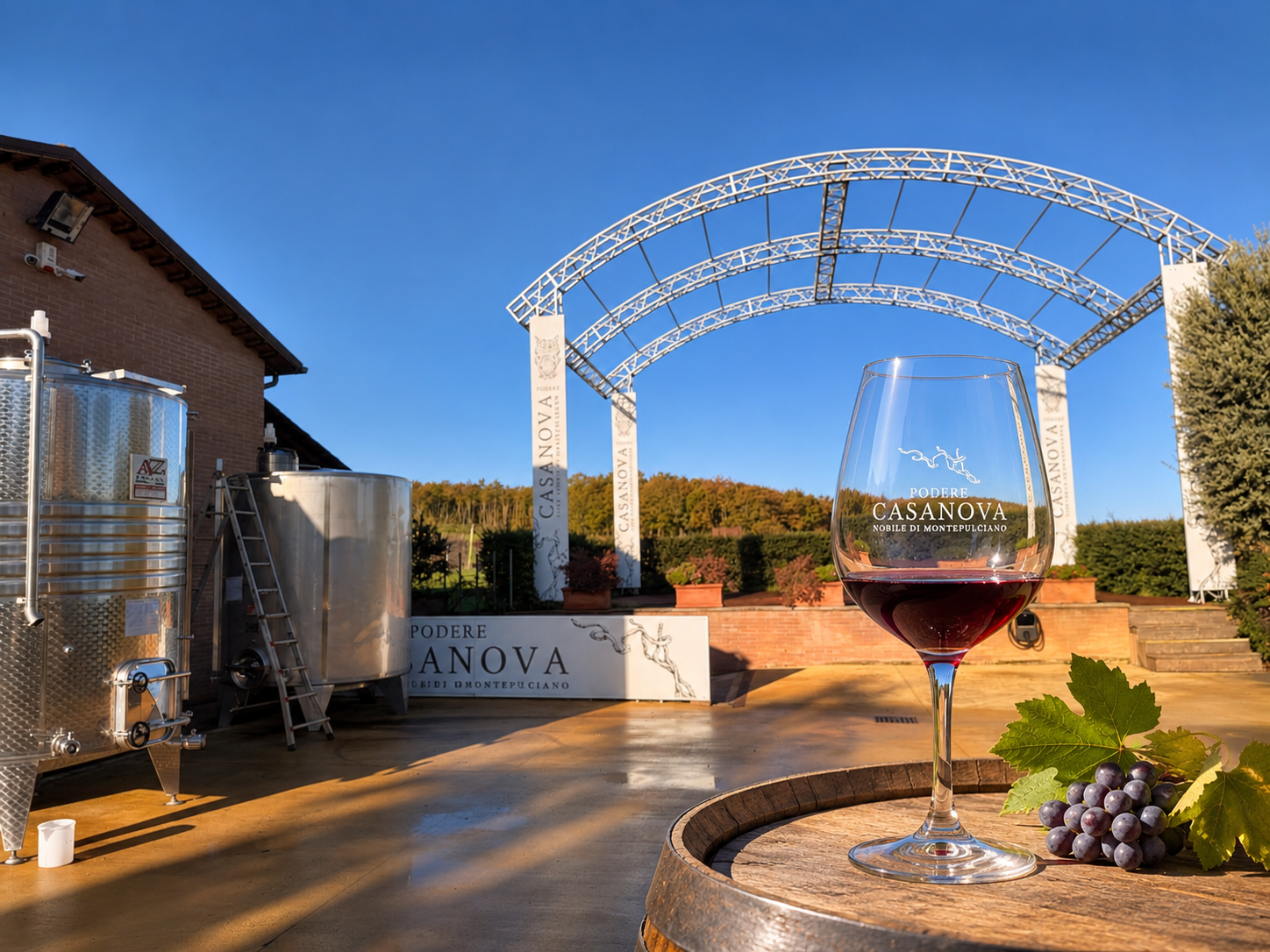
Between the winery and the main house, a theater has been built overlooking a private agora, designed to host concerts and performances during the summer season.
This choice broadens the meaning of hospitality and transforms the estate into a gathering place, where music and the arts interact with the landscape.
To imagine a summer evening in the hills, accompanied by the notes of a concert and the charm of nature, is to understand just how memorable an experience can become when it engages different senses.
Wine, like music, has its own language. Both demand attention; both can evoke emotions and forge bonds that endure beyond the moment they are experienced.
The presence of this cultural space adds another dimension to Podere Casanova: that of an entity that does not merely produce excellence but also seeks to share it through experiences of beauty and participation.
Experiences to savor, memories to cherish
The hospitality offerings are enriched by numerous activities designed to help guests discover the region from different perspectives.
Horseback riding, Vespa tours, bike rides, and boat trips on the lake allow guests to connect with nature and the landscape at their own pace.
Each experience can conclude with a tasting of the estate’s wines, transforming the return to the winery into a moment of conviviality and discovery.
Throughout the year, educational workshops are also organized in collaboration with the AIS (Italian Sommelier Association), dedicated to those who wish to explore wine culture and deepen their knowledge.
It is a way of interpreting wine tourism that goes beyond a simple winery tour and fosters a deeper connection with the region.
Visitors to Podere Casanova can choose to learn about wine, stay among the vineyards, participate in a cultural event, or explore the surrounding countryside. These diverse experiences share a fundamental element: the desire to transform the journey into an authentic encounter.
“Made in Italy” that chooses to safeguard the future
The history of Podere Casanova invites us to reflect on what truly makes Italy’s heritage precious.
“Made in Italy” is not just a collection of products recognized worldwide. It is a work ethic, an ability to interpret local contexts, and a sensibility that combines knowledge, creativity, and responsibility.
Companies that choose to invest in environmental protection, quality, and hospitality help build a model of development in which economic value can coexist with cultural and social value.
In Montepulciano, Isidoro and Susanna Rebatto’s project embodies precisely this possibility.
Ten years in business represent not only a milestone to celebrate but a journey marked by decisions, experimentation, and faith in the future.
The decision to forgo a harvest out of respect for the land, the care given to every cluster of grapes, and the desire to open the winery to hospitality and culture are different expressions of the same vision.
A vision in which excellence cannot be separated from an awareness of one’s responsibilities.
And as we leave Podere Casanova, amidst the hills that stretch as far as the eye can see toward Montepulciano, a feeling lingers that is hard to capture in a single word.
It is the memory of the wines we tasted, certainly. But it is also the memory of the people we met, the passion that drives their work, and the beauty of a landscape that continues to tell its own story.
Because some places captivate us for what they offer, others for what they represent.
Podere Casanova reminds us that the truest value of a business is measured not only by what it produces, but also by what it chooses to protect.
And perhaps this is the highest form of excellence: allowing the land to continue being generous, without forgetting that our first duty is to care for it.